
Ways to wander
Are Self-Guided City Tour Apps Worth It for Solo Walks?
Is a self-guided city tour app worth using instead of wandering alone? Compare route guidance, local stories, flexibility, and phone dependence.
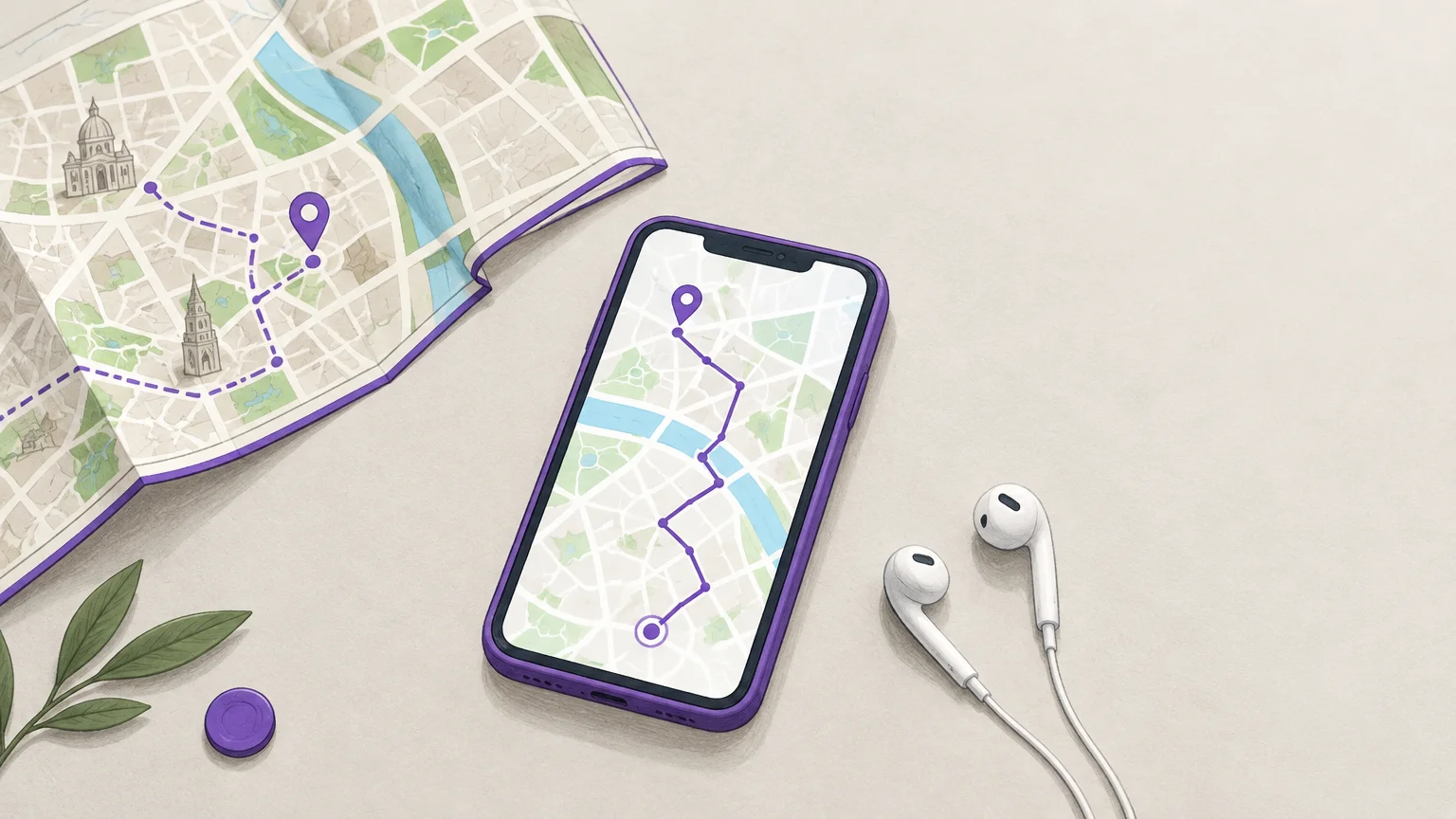
A city is easier to understand when you know why a building matters, but a fixed route can interrupt the pleasure of following a side street. If you are exploring alone, our self-guided walking tour apps for solo travelers page describes how an app can add guidance without a group. Think of it as a possible companion, not a rulebook.
Is a self-guided city tour app worth using instead of wandering alone? Often, if you want directions, stories, or a theme without a scheduled group. Unstructured wandering is better when curiosity, spontaneous detours, and phone-free attention matter more. The practical choice is rarely all-or-nothing: follow a route for a few stops, then step away whenever the city draws your attention.
What does an app add to a city walk?

A useful route can reduce the work of choosing what to see next. It connects landmarks into a walk and may add local history, cultural details, or audio stories at each stop. That can be especially useful when you have limited time, are new to the area, or want a theme such as architecture or food.
Directions also make it easier to keep moving without repeatedly planning each turn. Still, a route only guides your choices; it does not make every stop essential. Our explanation of how self-guided walking tour apps work covers the basic format. Look for a route you can pause or leave easily, rather than one that makes you feel obliged to complete every stop.
When does a route make the walk better?
A route is most useful when it adds something you would not get from a map alone. Audio stories can explain why a place matters, while walking directions connect the story to what you see around you. A themed or personalized route can also make a short visit feel more focused than opening a general map and choosing stops at random.
But an app is not the same as a live guide. A 2025 comparison in university geography teaching found lower retention results from app-guided excursions than from teacher-guided ones. The researchers also reported that students missed personal support and interaction. Those results concern students and educational excursions, not city tourists, but they highlight an important distinction: an app can provide context without offering a live conversation. (tandfonline.com)
If you want local stories and context while exploring at your own pace, we bring curated walking routes, audio storytelling, and directions between stops together. The right experience still depends on the destination and route, so check that its subject and stops match your interests.
What do you gain by wandering without a plan?
Exploring without a tour app leaves more room to respond to the city. You can follow a lively street, sit down when you find a café, or change direction without checking whether a stop fits the route. This style suits repeat visitors, travelers with flexible schedules, and anyone who enjoys making discoveries without knowing what comes next.
Going without a route does not have to mean going without navigation. You can use a general map to get back to your accommodation or find a destination, then put your phone away while exploring nearby streets. Our page on city exploration apps for discovering a city on foot looks at that broader use of walking apps. You can also follow a tour for its context, then leave it when something else catches your attention.
The trade-off is that you choose the route and supply the background yourself. If you have already researched the neighborhood or prefer an open-ended walk, that may be a pleasure rather than a drawback. If you want a little structure, a route can reduce planning without requiring you to give up spontaneity.
What should you check before starting?
Before setting off, consider the route length, terrain, and the time you have available. Check whether stops are open when you plan to arrive, and whether the route involves stairs or surfaces that do not suit your needs. A map and directions are useful only if the route itself fits the day you want to have.
Also check what the app requires from your phone. Location access, audio playback, screen use, and a mobile data connection can affect your walk. A 2022 account of self-guided university excursions noted that some students found the app battery-hungry or forgot to bring a power bank. That report concerns a university activity, but checking your battery and offline options before setting out is practical anywhere. (frontiersin.org)
Download route information in advance if the app supports it, bring headphones if you want audio, and keep enough battery for navigation. If you would rather avoid looking at your screen, choose a route with clear audio directions, when available. A paper map or a saved address can provide a simple backup.
How can you decide for this particular walk?
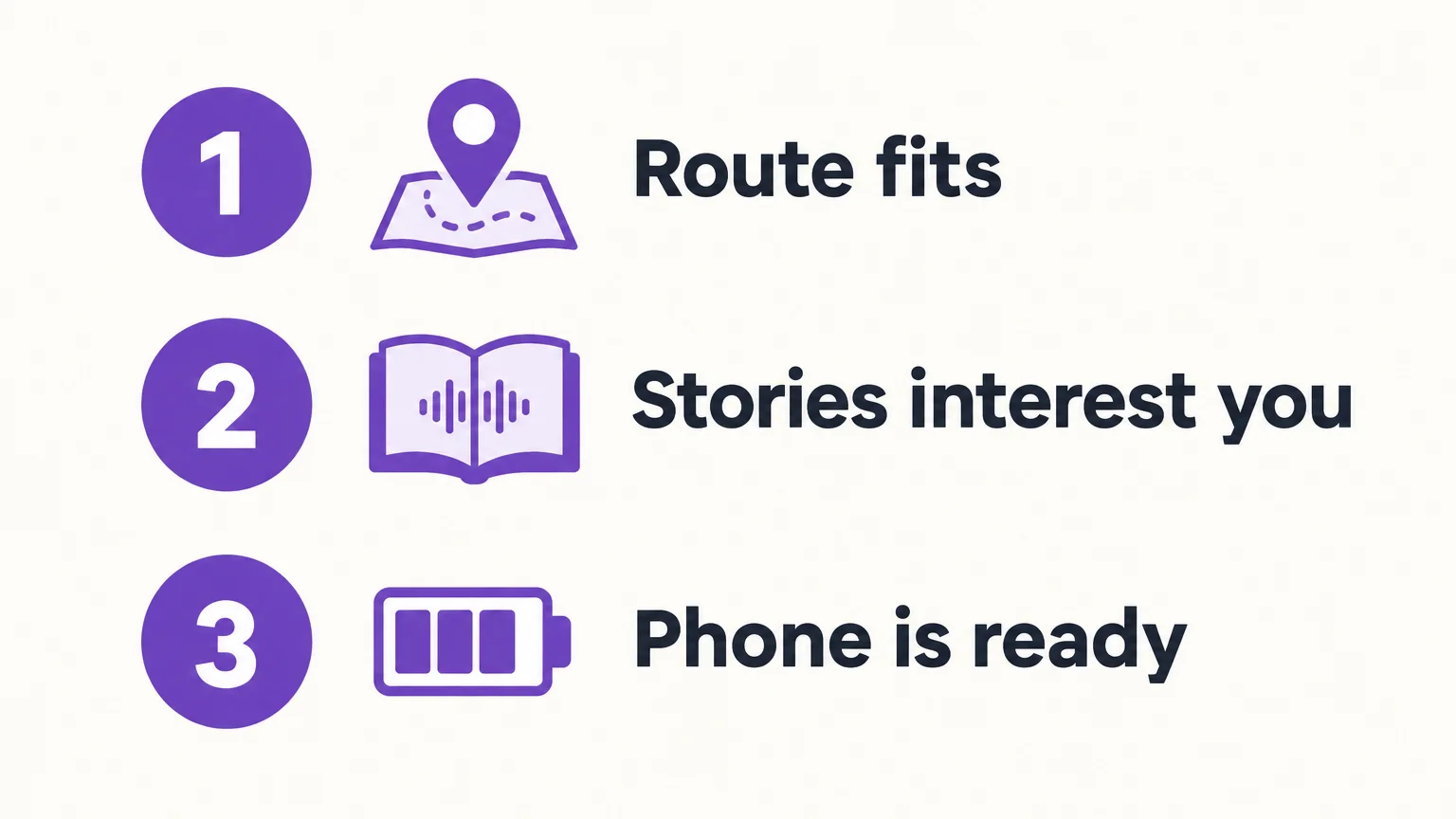
Ask yourself three questions: Do you want a planned route? Are stories or a particular theme part of the experience you want? Is your phone ready for maps or audio? If you answer yes to the first two, a self-guided tour may add useful structure. If the third answer is no, choose a route that works offline, carry a backup, or explore without the tour.
For a walk built around a particular interest, our personalized walking tour apps page can help you consider that format. We offer personalized routes made from trusted sources, as well as curated tours and location-based games. Our experiences are free to start, with payment required to continue beyond the first few stops.
You can also try a simple hybrid. Follow a route through the places you most want to understand, then pause the tour for lunch or take a detour through a neighborhood street. That gives you access to route guidance and local context without treating the route as a schedule.
Choose the walk that fits your day
A self-guided city tour app is worth using when directions, storytelling, or a focused route add value to your visit. Wandering without one makes more sense when discovery itself is the goal, or when you prefer to keep your phone away. Decide how much structure you want, prepare for your phone’s needs, and leave room to change plans.
Make Your Next City Walk Your Own
Sometimes a little structure makes it easier to notice the stories behind the streets. At other times, the pleasure is in choosing your own direction. We offer ways to explore on foot that leave space for both, whether you are walking alone or with others.
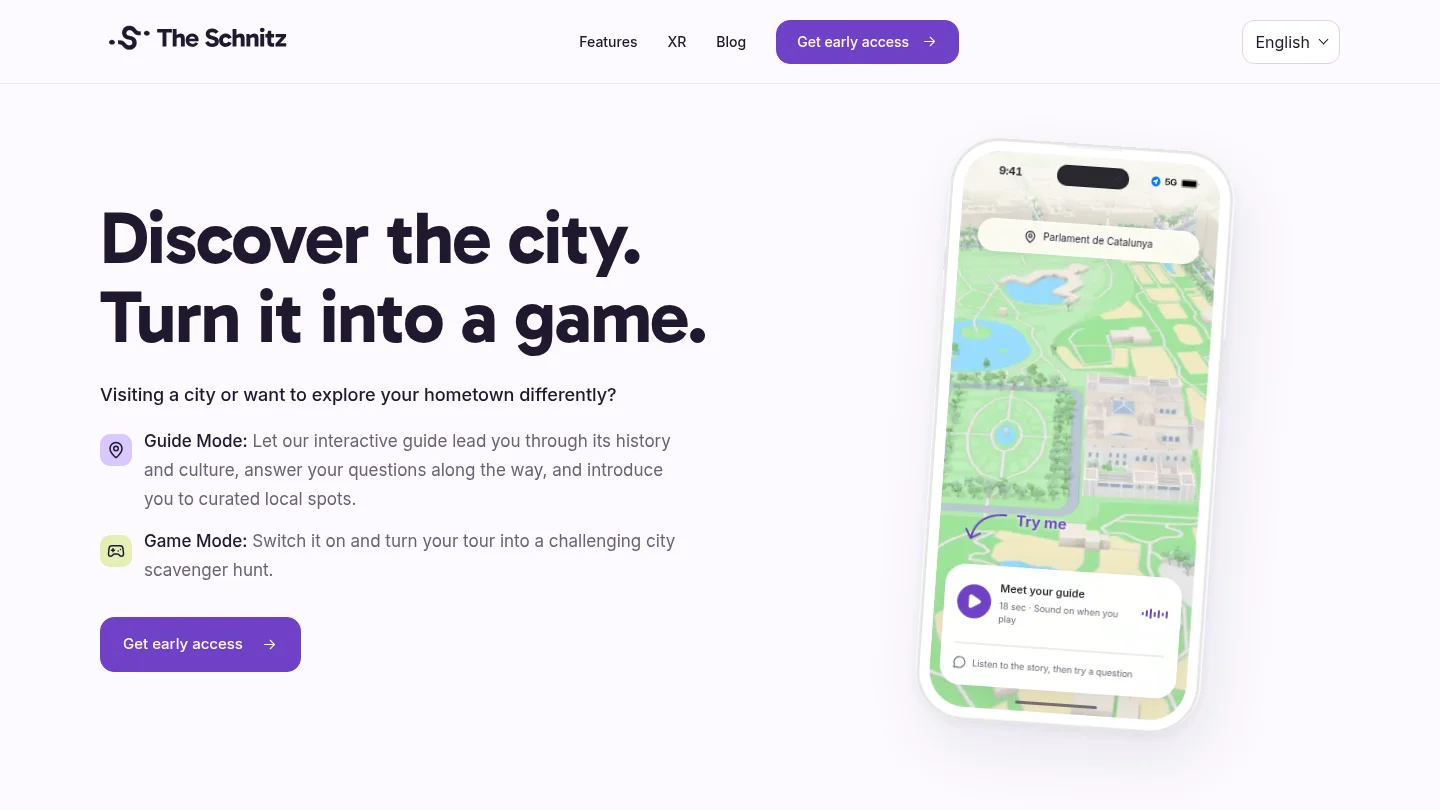
Choose a curated tour, a location-based game, or a personalized route shaped around your interests. Follow walking directions between stops and discover local history, culture, and places to explore. Our tours and games are free to start, with paid access required to continue beyond the first few stops. Explore our city walks and games to find an experience that fits your plans.
Frequently Asked Questions
Can you use a self-guided city tour app and still wander freely?
Yes. Pause the route, skip a stop, or take a detour whenever you like. A useful tour supports your walk rather than setting a strict schedule.
Is a self-guided app suitable for a first visit to a city?
It can be useful when you want a route and background on local landmarks. Check that the stops match your interests and the time available.
Do you need mobile data to follow a walking tour?
That depends on the app and the tour. Check whether maps and audio can be downloaded before you rely on them away from Wi-Fi.
How can you avoid draining your phone battery on a walk?
Start with a charged phone and download tour content in advance if that option is available. Lower screen use and carry a power bank if you expect a long outing.
What does The Schnitz offer for solo city walks?
We offer curated tours, location-based games, and personalized walking routes for solo explorers and groups. You can start tours and games for free, then pay to continue beyond the first few stops.
A note from The Schnitz
More curiosity. Your own pace.
We’re building The Schnitz around self-guided walks, audio stories and playful city exploration. Zürich is our initial focus; this article is independent reading, not an available Schnitz tour.
Explore The Schnitz & join the waitlist