
Ways to wander
How Self-Guided Walking Tour Apps Work: Routes, GPS and Audio
Learn how self-guided walking tour apps work, from mapped stops and GPS cues to audio, offline access, route choices, and payment models.
A city walk is easier to enjoy when you know where to go next without having to follow a group. Understanding how self-guided walking tour apps work starts with a simple idea: a phone connects a walking route to places worth noticing. To see how city exploration apps help you discover a city on foot, consider how a digital guide adds stories and activities to ordinary directions.
Unlike a live tour, an app lets you start, pause, and explore at your own pace. The exact experience depends on the tour: one might provide a map and written notes, while another adds audio, location-based prompts, or a game. In 2026, Arival reported that 13% of U.S. and European travelers had taken a self-guided tour through a mobile app in the past year. That figure describes reported use, not how well any particular app works.
What happens after you tap Start?
Imagine choosing a walk through a historic district. The app presents a route with several stops, then shows how to reach the first one. At each stop, you open a story, listen to audio, view a photo, or complete an activity. Afterward, the map points you toward the next place.
The route is usually planned around a theme, neighborhood, or set of landmarks. Some apps show a fixed sequence; others let you skip a stop or explore nearby. The route map is the framework, but the tour’s instructions and content determine what you learn along the way. A short walk might cover a few landmarks; a longer one could include breaks or optional detours.
In August 2026, Arival’s traveler research reported that 13% of U.S. and European travelers had used a mobile app for a self-guided tour in the past year. That figure refers to tour-app use, not walking or map apps generally. It offers context for the format without measuring the quality of an individual route or guide.
A route is only one layer of the experience

A navigation app answers, “How do I get there?” A tour app can add the next question: “What should I notice when I arrive?” That difference matters. An ordinary map can guide you to a landmark, while a tour may explain its history, point out a detail on the building, or introduce a nearby food spot.
Arival’s 2026 article also distinguishes standalone walking tours from self-guided experiences at attractions. The reported usage rates differ by setting, so a city-walk app and a museum audio guide should not be treated as the same product. The useful question is whether the content suits the place and the kind of exploration you want.
For instance, a history-focused walk might connect several buildings through a shared story. A food-focused route might use stops to highlight local places to eat. Our overview of the best self-guided walking tour apps can help you compare different approaches before choosing a route.
How does GPS connect your location to each stop?
Many tours show your position on a map while you walk. Some use location triggers to start an audio clip or reveal a prompt when you reach a designated area. Others ask you to tap a stop manually. A marker on the map, a short direction, or a visible landmark can help confirm you are in the right place.
Automatic playback is convenient, but it is not universal. A route may ask you to start each story yourself, and a location prompt might not activate exactly where you expect. If a stop does not appear, check the map, read the directions, and make sure the app has the location access it needs. Avoid staring at the screen while crossing streets or walking through busy areas.
A 2021 study based on 1,438 survey responses in Bologna and Porto examined how people used pedestrian navigation apps to find places and routes. Its focus was navigation, rather than storytelling tours, which illustrates why it helps to distinguish a route-finding tool from an app that also supplies place-specific content. For more background, see the 2021 pedestrian app study.
What might you hear, read, or do at a stop?
Content varies by tour. A stop might offer a recorded explanation, a short written passage, a photograph, or a question about the surroundings. An audio guide lets you listen while looking at the place, but reading or interactive options suit visitors who prefer not to use headphones.
Some experiences are designed as games rather than linear tours. You might solve a riddle by observing a statue or work through challenges with a companion. The surroundings become part of the activity, so read instructions carefully and keep your attention on your surroundings.
If you are deciding between narration and interactive play, our article on how audio guide apps work for city tours explains the audio format. For game-based city experiences, see how Questo compares with other city tour apps. We offer curated tours with audio stories, location-based games with riddles and challenges, and personalized walks built from trusted sources.
Do you need internet access throughout the walk?
That depends on the app and the tour. Some experiences require a live connection to load maps or content; others let you download materials in advance. If you expect unreliable service, check whether the specific tour includes an offline map and whether its audio or other files must be downloaded separately.
Before leaving Wi-Fi, open the tour and confirm the download is complete. Check that the map and stop information are available, charge your phone, and consider carrying a portable battery for a long walk. Offline access is a feature to verify, not an assumption to make about every tour app.
Location access is a separate consideration from internet access. A tour may request location permission to show your position or trigger a stop, but the app’s settings and privacy explanation should tell you how that permission is used. A 2026 review of 95 studies using app-based GPS data describes how data collection and sharing differ across app types; it concerns mobility research, not a checklist of features for tour apps. The 2026 GPS-data review is a useful reminder to check permissions rather than assume all apps handle location alike.
How do payment and access usually work?
Access models differ. A tour may be free, sold as a one-time purchase, included in a subscription, or available to try before you pay to continue. Check the price and what it unlocks before starting, especially if the app has several tours or charges separately for individual experiences.
Some apps provide a free preview of the first stops, then ask you to pay to unlock the rest. Our tours and games work that way: you can start with the first few stops free, then pay to continue. For team games, one purchase unlocks the remaining experience for the whole team.
Before you choose, consider the length of the route, whether you want audio or activities, and whether you can pause and resume. If you prefer to explore at your own pace, look for clear walking directions and saved progress. Those details make it easier to fit a tour around meals, rest breaks, and unplanned discoveries.
What should you check before downloading a tour?
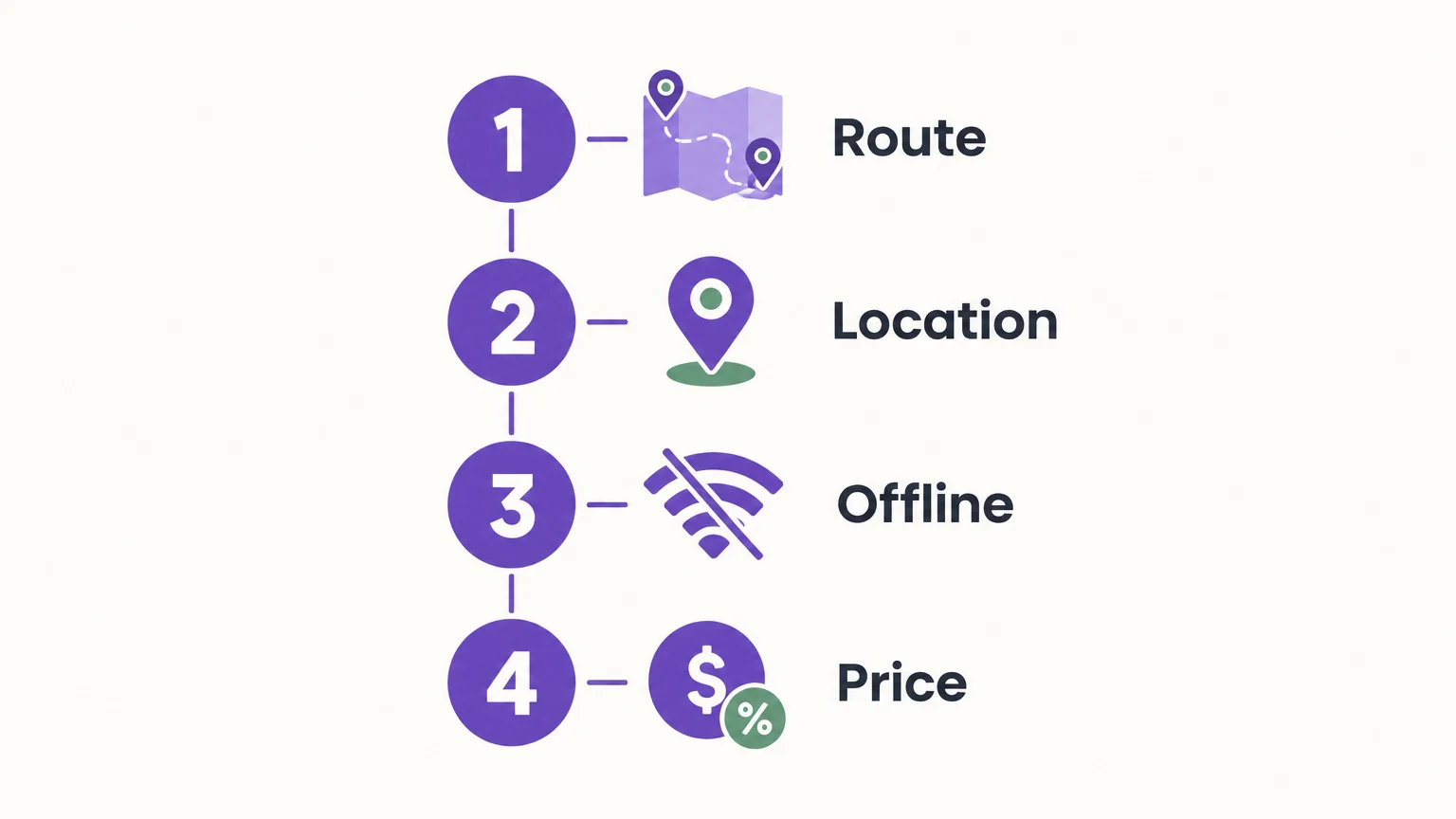
Before setting out, review the route length, the type of content, and the access terms. A few checks can prevent a confusing start or an unexpected interruption:
- Route: Check the distance, expected stops, and whether the route has optional detours.
- Location: Find out whether stories play automatically or require a tap, and review the app’s location permission.
- Offline use: Confirm which maps and tour materials can be downloaded before you leave.
- Payment: Check what is free, what requires payment, and whether access applies to one person or a group.
A tour that fits your interests and practical needs is easier to enjoy than one chosen only for its title. Decide whether you want a narrated walk, a set of challenges, or a route focused on a personal interest, then check the details before you begin.
Make the walk work for you
Self-guided walking tour apps combine directions with stories or activities connected to real places. Before you start, check how stops are presented, whether content works offline, and what payment unlocks. Choose a route that matches your interests, then follow the directions while staying attentive to the city around you.
Explore a City on Your Own Terms
If you want more than turn-by-turn directions, choose a walk that gives the places along your route context. You can follow curated audio stories, play a location-based game, or shape a personalized walk around a topic that interests you.
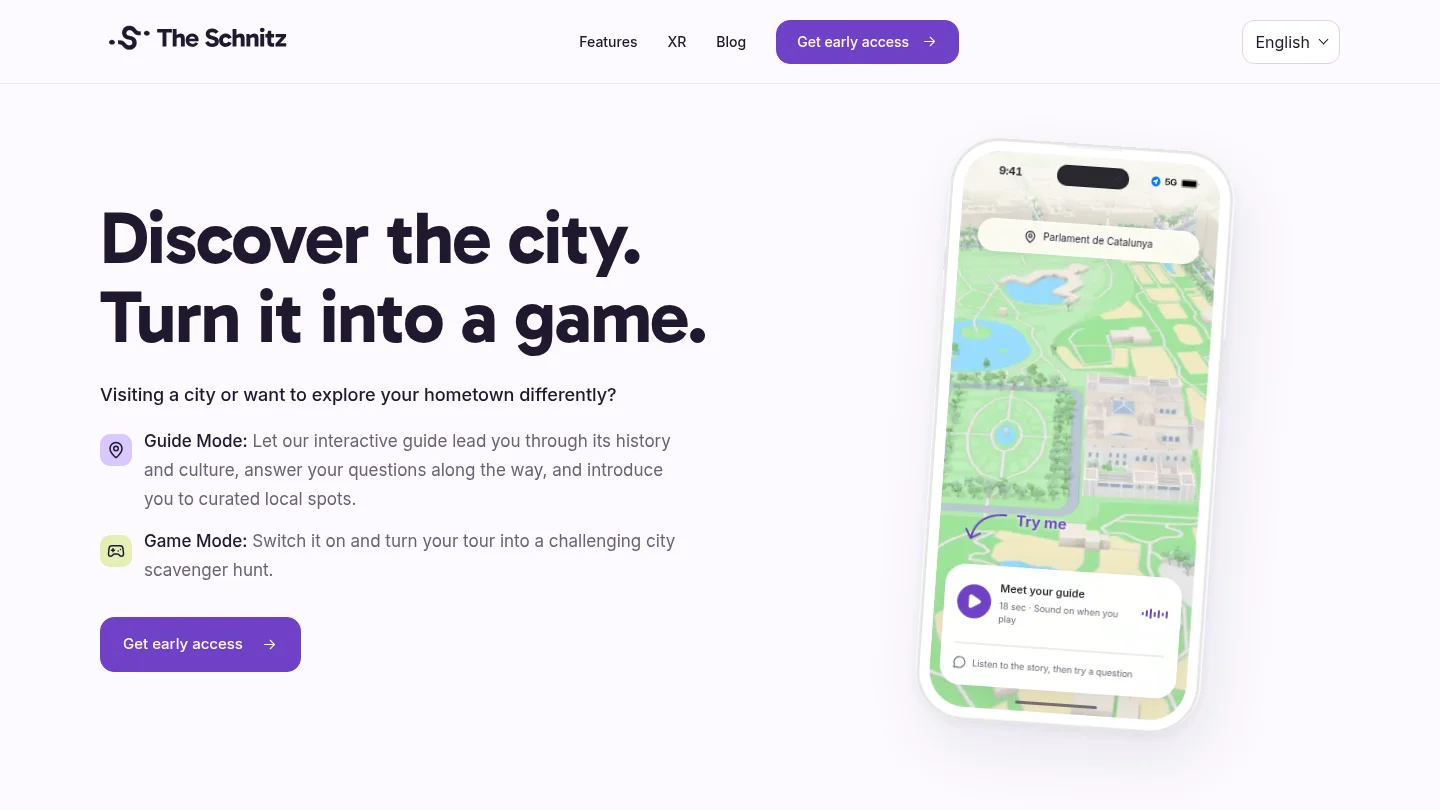
Our tours and games are free to start, with payment required to continue beyond the first few stops. Maps and walking directions connect each stop, and progress is saved so you can pause and resume later. Explore the city with a walking tour app.
Frequently Asked Questions
Do self-guided walking tour apps need GPS?
GPS or other location services can show your position and help connect a stop with nearby content. Some tours also let you open each stop manually, so check how the selected experience works.
Can you pause a self-guided tour and resume later?
Many apps let you pause, but saved progress is not universal. Check the app’s instructions before starting if you expect to split the walk across multiple outings.
Can you use a walking tour app without mobile data?
Some apps support offline maps and downloaded tour content, while others need a connection for certain features. Download the tour and confirm what remains available offline before you set out.
What is the difference between an audio guide and a walking tour app?
An audio guide focuses on spoken information at a place or along a route. A walking tour app may also include maps, walking directions, written stories, or location-based activities.
Do self-guided walking tour apps cost money?
Payment models vary by app and tour. Some offer a free introduction, while access to the remaining stops may require payment.
A note from The Schnitz
More curiosity. Your own pace.
We’re building The Schnitz around self-guided walks, audio stories and playful city exploration. Zürich is our initial focus; this article is independent reading, not an available Schnitz tour.
Explore The Schnitz & join the waitlist